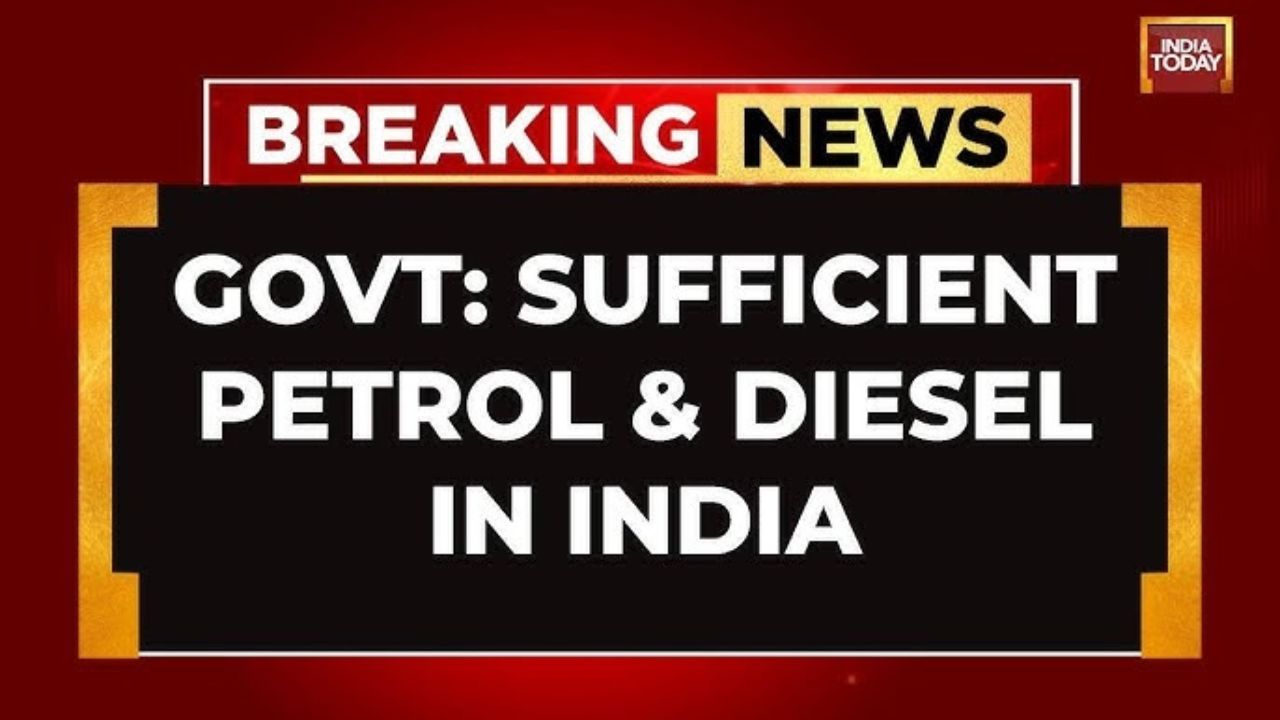
India’s fuel price situation has drawn major attention as the government announces new support measures aimed at stabilising petrol and diesel prices across the country. With international crude oil markets witnessing strong volatility, authorities have stepped in to protect consumers and prevent a sudden spike in transportation and energy costs that could affect millions of households and businesses.
In recent weeks, global crude oil prices have seen sharp fluctuations due to supply concerns and geopolitical tensions. Because India imports a large portion of its crude oil needs, any major movement in international prices can quickly influence domestic fuel rates. To reduce the impact on consumers, the government has introduced policy measures designed to balance market pressures while maintaining supply stability.
Government Steps In to Ease Market Pressure
To manage rising fuel costs, the government has introduced relief measures aimed at reducing the financial burden on oil marketing companies. These measures help companies absorb part of the cost increase rather than passing the entire price rise directly to consumers at fuel stations.
By adjusting certain tax structures and implementing market support policies, authorities hope to keep petrol and diesel prices relatively stable even during periods of high global oil prices. This approach is designed to prevent sudden shocks in the domestic fuel market.
Why Fuel Prices Are Under Pressure
The international oil market has experienced significant instability in recent months. Several global factors such as supply disruptions, geopolitical developments and changing demand patterns have pushed crude oil prices higher.
For a country like India, which relies heavily on imported crude oil, such developments can quickly translate into higher petrol and diesel prices. This is why government intervention often becomes necessary when global oil markets experience extreme fluctuations.
Focus on Protecting Domestic Supply
Another key objective of the new measures is to ensure that domestic fuel supply remains sufficient and stable. During times of high international demand, refineries may find exports more profitable. However, policies are sometimes introduced to prioritise domestic availability so that transportation, industry and essential services continue to operate smoothly.
Maintaining adequate fuel supply is crucial for the economy because petrol and diesel play a vital role in logistics, agriculture and manufacturing activities across the country.
What This Means for Consumers
For consumers, the government’s intervention is mainly aimed at preventing sharp increases in fuel prices. While global oil prices may still influence domestic rates, these measures are intended to cushion the impact and maintain relative stability in the market.
This means that instead of experiencing sudden and steep price hikes, consumers may see more controlled adjustments depending on how global crude oil prices move in the coming weeks.
Outlook for Fuel Prices in India
Energy analysts suggest that the future direction of petrol and diesel prices in India will largely depend on global crude oil trends. If international prices stabilise or decline, domestic fuel prices may also ease. However, if global prices continue to rise, further policy measures may be considered to manage the situation.
The government is closely monitoring market developments and may introduce additional steps if required to keep fuel prices under control and protect the broader economy.
Conclusion
Fuel prices remain one of the most closely watched economic indicators in India. The government’s newly announced support measures aim to maintain stability in the fuel market and shield consumers from the full impact of global oil price volatility. As international energy markets evolve, further adjustments may be made to ensure that both consumers and the economy remain protected.