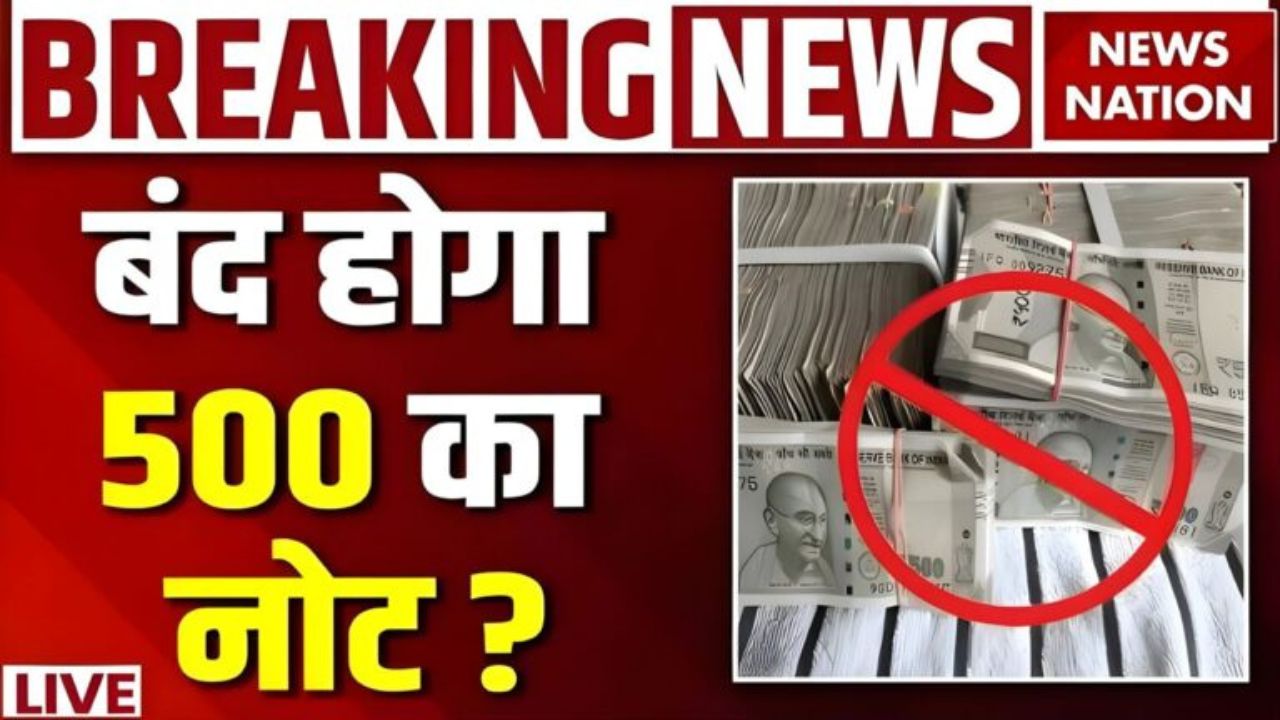
Confusion about the ₹500 currency note has been spreading across social media and messaging platforms, with many claims suggesting that the note may be discontinued or restricted in 2026. To address these rumours, the Reserve Bank of India has clarified the actual rules and guidelines regarding the ₹500 note. These updates are important for every citizen because the ₹500 denomination remains one of the most widely used currency notes in everyday transactions across the country.
₹500 Note Remains Legal Tender in 2026
The most important clarification is that the ₹500 note continues to be fully valid and legal across India. There has been no official announcement about withdrawing, banning, or demonetising this denomination. Citizens can continue to use ₹500 notes for all types of payments including shopping, business transactions and everyday expenses without any restrictions.
Authorities have also clarified that viral messages claiming a deadline to deposit or exchange ₹500 notes are false and not based on any official directive.

ATM Changes Introduced by RBI
One of the genuine changes introduced by the central bank relates to ATM currency availability. Banks and ATM operators have been instructed to increase the availability of smaller denomination notes such as ₹100 and ₹200 in ATMs.
Under this directive, a large percentage of ATMs are required to dispense smaller denomination notes to improve access for people who need lower-value currency for daily purchases. This rule does not stop ATMs from dispensing ₹500 notes. Instead, it simply ensures that customers can easily withdraw smaller notes along with higher denominations.

Focus on Preventing Fake Notes
Another key aspect of the guidelines involves stronger monitoring and verification systems to reduce the circulation of counterfeit currency. Banks and ATMs are increasingly using improved detection technology to identify suspicious notes and ensure only genuine currency remains in circulation.
Citizens are also encouraged to check basic security features on ₹500 notes when receiving cash during transactions. These security measures help protect both businesses and consumers from financial losses caused by counterfeit currency.

Rules for Depositing or Exchanging Notes
People can deposit or withdraw ₹500 notes from banks without any special restrictions. If a note becomes damaged or torn, it can usually be exchanged at a bank branch according to RBI currency exchange rules. Banks are required to follow official guidelines for accepting damaged notes, ensuring that customers can replace unusable currency without major difficulty.
What Citizens Should Avoid
Authorities have warned people not to believe viral social media messages claiming sudden bans, withdrawal deadlines, or special schemes related to ₹500 notes. Major currency decisions are always officially announced through formal channels before being implemented. By relying only on verified information, citizens can avoid unnecessary panic and continue using cash normally.

Conclusion
The ₹500 note continues to play a crucial role in India’s cash economy, and there are no plans to discontinue it in 2026. The latest RBI clarifications mainly focus on improving ATM access to smaller notes and strengthening counterfeit detection systems. For everyday users, this means that ₹500 notes remain valid, usable and widely accepted across the country.